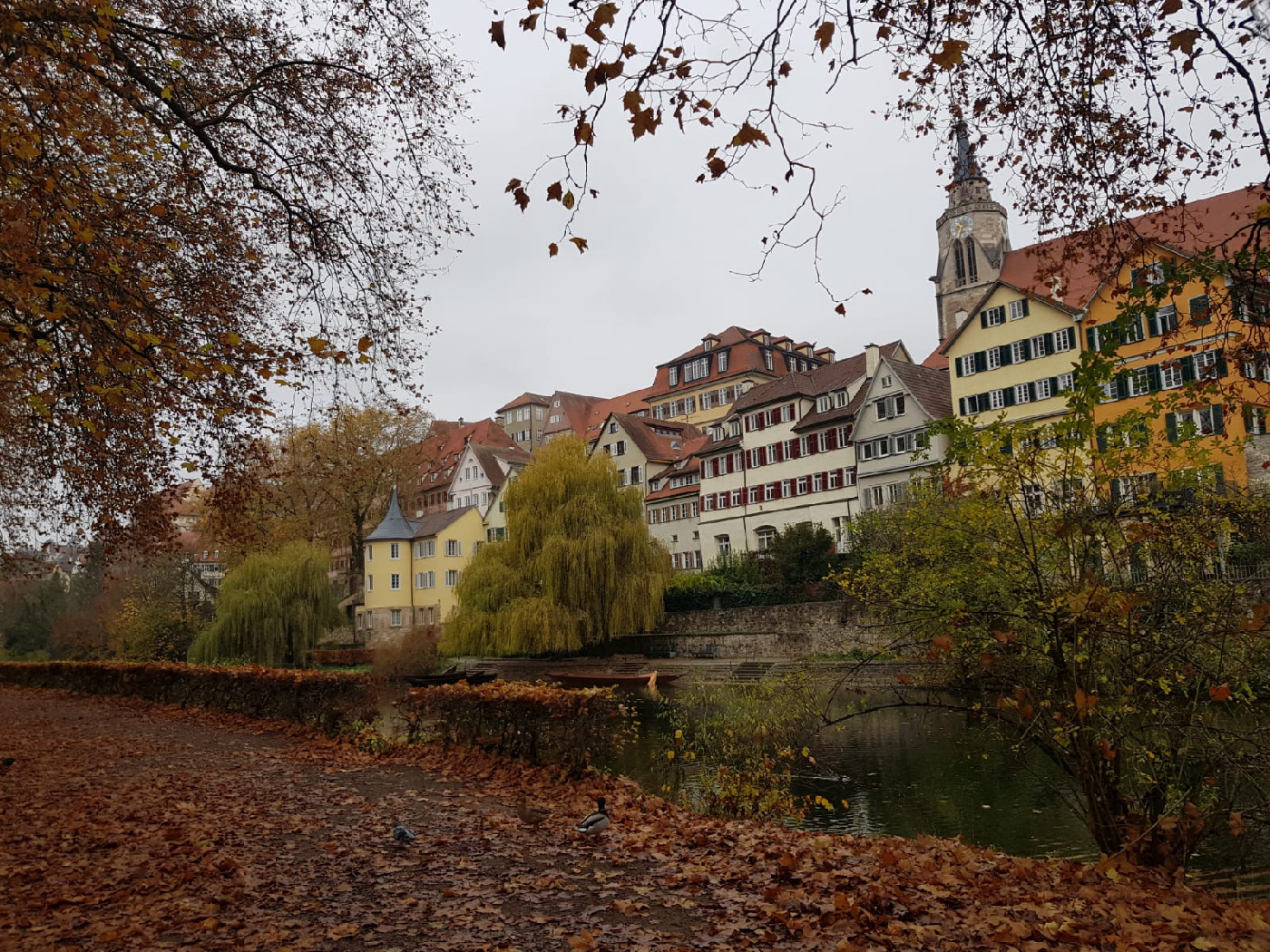
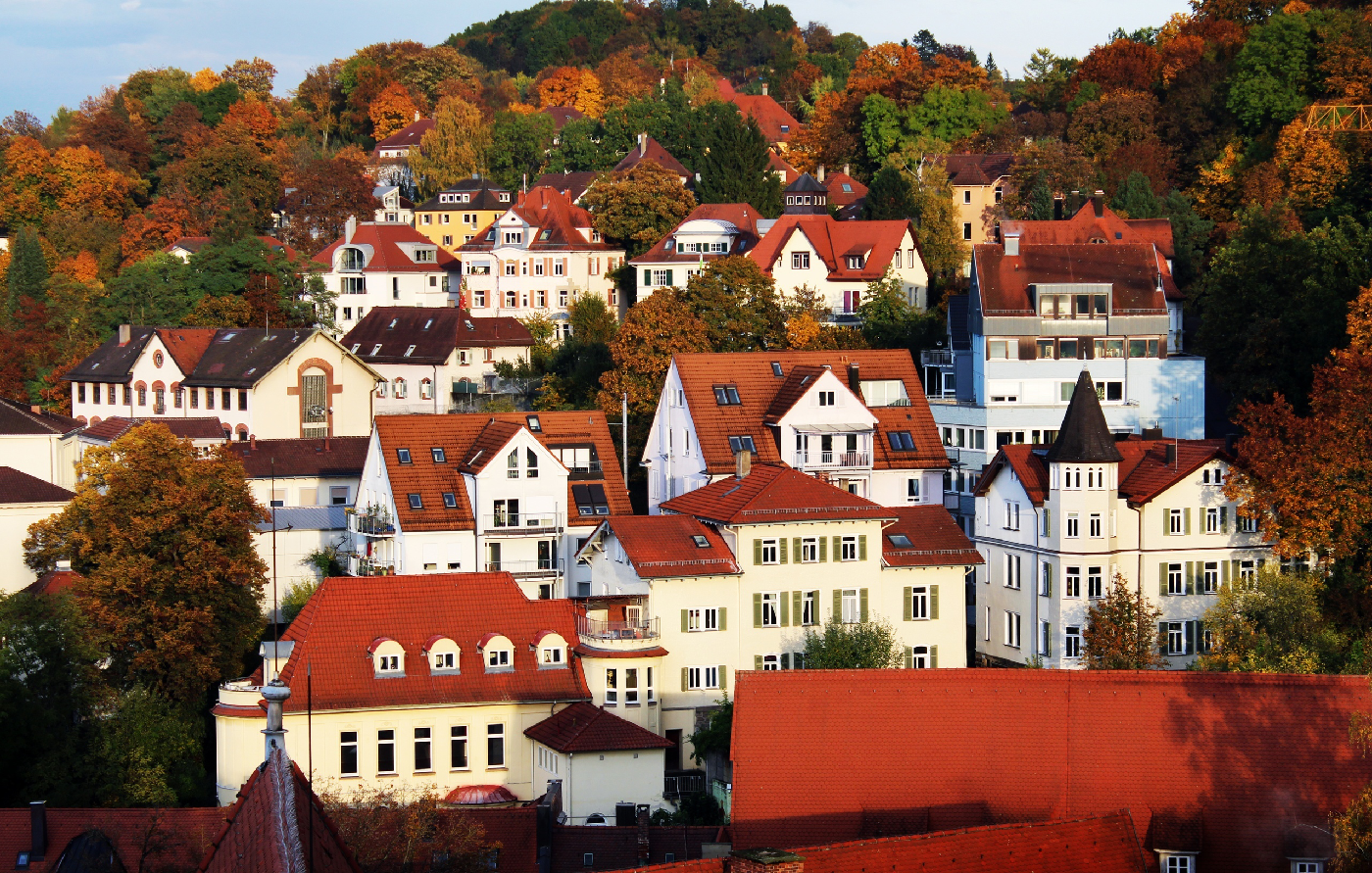
The Treaty on Friendly Relations between Petrozavodsk and Tübingen was signed on October 9, 1989. The signatures on the document were affixed by P.E. Peshchenko and Dr. E. Schmid at the Petrozavodsk City Hall. And at the New Year reception in 1990, the same ceremony was repeated at the Tübingen Town Hall. This created the political framework and civic foundation for a new partnership 1.
In 2024, the “West-East” Society of Tübingen (1986) celebrated 35 years since its founding. Back in the distant 1980s, the Society gave impetus to the development of close partnership relations between our cities both at the level of numerous contacts between citizens and public organizations and at the level of city administrations. Relations between the cities developed dynamically from the very beginning. Contacts were established mainly through cultural, educational, and sports ties, and the collection and transfer of humanitarian aid 2. Mutual visits by schoolchildren, athletes, artistic groups, doctors, teachers, economists, and representatives of city administrations led to the creation of a truly informal friendly atmosphere in relations between the cities. 26 transports with humanitarian aid (clothing and footwear, functional beds for hospitals, wheelchairs, walkers, medical equipment: an ultrasound machine, a dental office, books, blackboards, computers, food parcels). Over 13 years — 900 tons of humanitarian aid delivered to Petrozavodsk by Ernst-Moritz Friedrichs, Heiner Schweikhardt, and others 3. One of the active members of the society, and later its chair, was Lilia Künstle. She gave fascinating lectures and events for the residents of Tübingen, introduced them to the culture of Russia and Karelia, spoke about the sister-city ties between Petrozavodsk and Tübingen, and enthusiastically worked to support and develop sister-city relations. “I want to tell about the living friendship between people” — that is what she said at meetings with students of Petrozavodsk State University. Her colleagues and friends wrote about Lilia and her work in their memoirs.
Memoirs of V.T. Dvinskaya
V.T. Dvinskaya, former colleague of Lilia in her work at the institute and in the West-East Society:
Lilia Petrovna Bukhlaeva-Künstle (May 25, 1954 – August 25, 2025)
In the late 1970s, a new secretary came to work at our Faculty of Foreign Languages — of blessed memory! — of the Karelian State Pedagogical Institute: Lilia Petrovna Bukhlaeva. She was a young, tall, sturdy woman with a loud voice in which a slight hoarseness could be heard. In her attractive dark-complexioned face there was something remotely Asian, but in Russia no one is surprised by that: in our multinational country, over the past centuries, there have been so many mixed marriages! And so many children have been born! Therefore, the concept of “Russian” has become rather relative. We, the teachers, often addressed her simply by her first name — Lilia, but this was not a sign that someone wanted to belittle her; rather, on the contrary, it was an expression of the comradely attitude toward her accepted among colleagues who respect each other.
Initially, Lilia simultaneously submitted documents and became a first-year student in our German department. Of course, she was much older than the other students; she was already a married woman and had a preschool daughter. However, it soon became clear that combining work and being a full-time student was objectively impossible. As a teacher, I was very sorry to lose her, a diligent and conscientious student, and I felt hurt for her as a person who wanted to work on herself and develop further. But I still did not know her well: our Lilia went and enrolled at the Latvian State University named after Peter Stuchka in Riga, where, as it turned out, there was a correspondence department of foreign languages. In due time she graduated from it and received a diploma. It became clear that this was a person of strong will, able to set goals for herself and achieve them. Very soon we all became convinced of Lilia’s brilliant human qualities as a worker: she was a hardworking, most meticulous, and most reliable person. If she was given tasks by the dean, heads of departments, or other teachers, their fulfillment required no supervision: everything was done quickly, on time, and scrupulously precisely. One could always rely on Lilia. Her dealings with students were educational in nature. Our students, yesterday’s schoolchildren, not accustomed to polite formalities, would burst into the dean’s office with various questions, asking or demanding from the threshold what they needed. And here Lilia unceremoniously sent them out the door, accompanying her demand to leave with admonitions about how to behave. Some, the most insolent, had to repeat the scene of entering and leaving 2–3 times, but everyone very quickly learned the rules of good manners. No one took offense at her; on the contrary, a circle of students formed around her who turned to her with confidential questions, and she helped them both with advice and with direct intercession. She enjoyed clear and well-deserved respect and authority at the faculty.
In October 1989, the Protocol on Partnership between Petrozavodsk and the University City of Tübingen was signed, and from that time one after another actions of a multi-directional nature began in the sphere of culture, education, politics, medicine, exchange of experience, etc. But the most famous and large-scale, encompassing a large number of residents of Petrozavodsk, was the humanitarian aid action, which continued for almost 12 years. The trucks with “humanitarian aid” arriving to us, the so-called “convoys,” required a great deal of work for unloading, warehousing, sorting, distribution, and delivery to residents. We mobilized both ourselves and our students. Of course, activists stood out here, and Lilia, having become one of them, provided enormous help, carried out this work in the evenings, and did it, as always and in everything, precisely, without unnecessary fuss, keeping records and documentation.
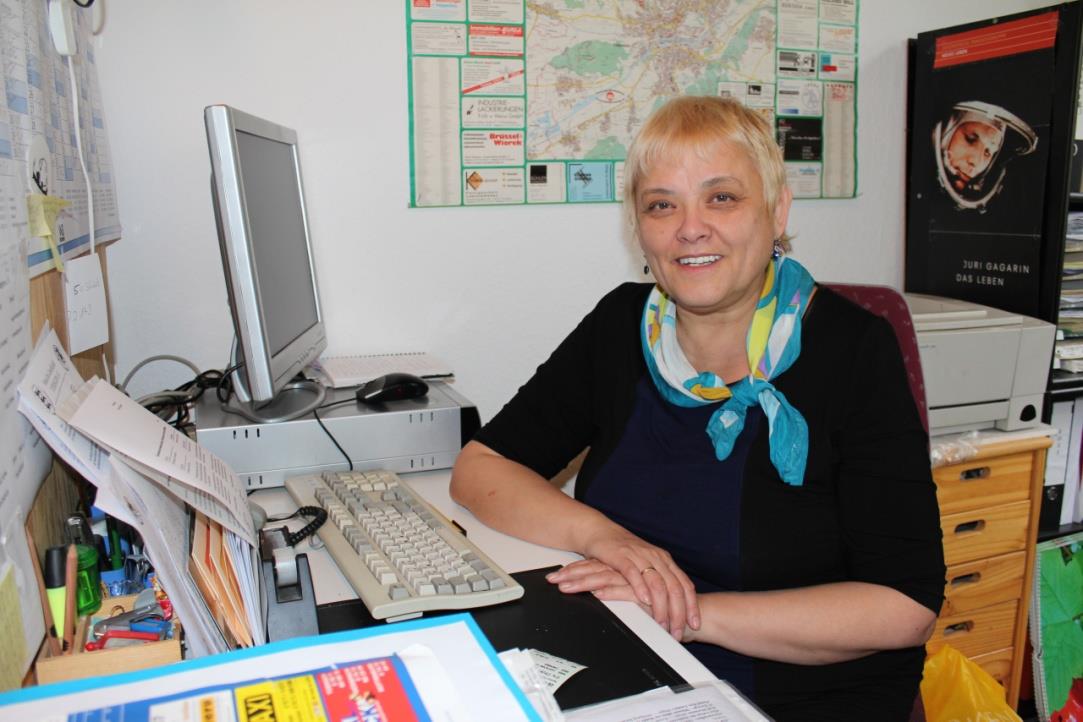
In the course of this work, she somehow met Peter Künstle, they had a romance, they married, Lilia changed her last name and moved to Tübingen in the early 2000s. Being a person of enormous energy and unable to idle about, Lilia began to help the chair of the German “West-East” Friendship Society, Dr. Jörg Bose, in his organizational work and in the realization of his enormous cultural plans. Unfortunately, in 2011 Jörg died, and then Lilia became his successor and took the entire sister-city work upon her shoulders. Never ceasing to learn and driven by her enduring striving “to grow above herself,” Lilia studied the history of Tübingen, its interesting places, sights, and local cuisine, greatly improved her knowledge of German, met many people, and created a circle of activists who supported her diverse projects, which her irrepressible imagination endlessly slipped to her. For example, I know of her events in recent years: European and Russian fashion; celebration of Maslenitsa in Russia, Easter traditions among the Orthodox; New Year in the Russian Federation; some performances for children; culinary traditions; trips to the surroundings of Tübingen (Bebenhausen), organization of the “Bürgerreisen” that have become a tradition (“Bürgerreise” — a trip of ordinary residents, citizens of a given city somewhere with the aim of getting better acquainted with the place of travel and the people inhabiting it. — author’s note) Usually these are sister cities. for both cities, etc. How did she have the strength to organize all this, to buy the necessary products or tickets, costumes and decorations, and..and..and.. In her there was clearly an artistic streak that awakened and developed in the process of constant creative activity. This helped Lilia both in realizing her plans and at the same time attracted many people to her. Carrying out various projects, Lilia never missed an opportunity to show those present the difference in the behavior of citizens of Russia and the West in various situations, always emphasizing — seemingly unobtrusively — the positive aspects characteristic of Russia and Russians. In recent times, in light of the events caused by the confrontation between Russia and Ukraine, she also invited Ukrainians to her events — adults and/or with children, if they promised to speak only Russian and not touch on politics, not try in any way to denigrate Russia.
Already several years ago, serious illnesses fell upon Lilia, each of which would have poisoned the life of any person. Many times she lay in local clinics, but all this was only palliative, and the illnesses did not go away. And nevertheless she did not stop her activity. A very strong, unexpected, treacherous blow for her was the death of her own daughter Ilona, which occurred from COVID in 2022. Ilona worked in the local Office of the West-East Society and carried out the part of the work connected with Petrozavodsk. This event, of course, aggravated Lilia’s weak condition. It is completely incomprehensible how she managed to overcome herself, to fight the physical side of her body that was betraying her, but her spirit and will were so strong that they allowed her to win. Of course, the love of her husband, her Peter, was an enormous support for her.
Unfortunately, everything earthly has its end. And for Lilia’s body the time came when it could no longer obey her will and gave up. This happened in the hot summer of this year. For everyone who knew Lilia and was well acquainted with her, her departure from this world is a great loss; we will miss her very much. And we can only wish that she be warmly received in the world she enters, and that she feel well there!
Memoirs of Vera and Boris Konanov
Vera and Boris Konanov:
Lilia Künstle – we will remember.
We have known Lilia Künstle (Li) for more than 30 years. She continued the work in the “West-East” Society of the city of Tübingen begun by Jörg Bose. She was elected chair of the friendship society. Despite difficult political conditions and the pandemic, Lilia managed to preserve cultural ties between Germany and Karelia. She defended the Society’s office in Petrozavodsk, found funds for the repair and rent of the premises, which allowed fruitful cooperation to continue. Lilia Künstle organized joint events that helped strengthen friendship between the two countries.
Thanks to Lilia, many musical groups, artists, performers, writers, and children’s groups from Karelia came to the sister city of Tübingen. And also creative groups from Tübingen came to Karelia.
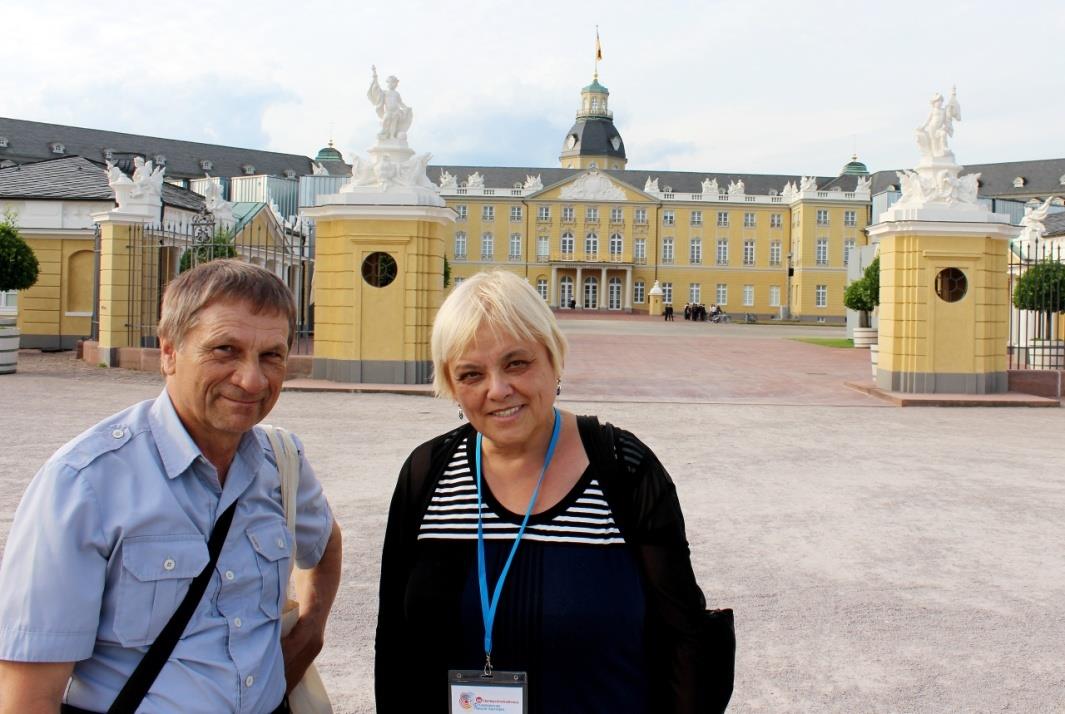
Dozens of exhibitions in various fields were organized in the sister cities. Several films and many photographs about joint events have been created about the sister-city ties between Petrozavodsk and Tübingen. All this was organized by Lilia Künstle.
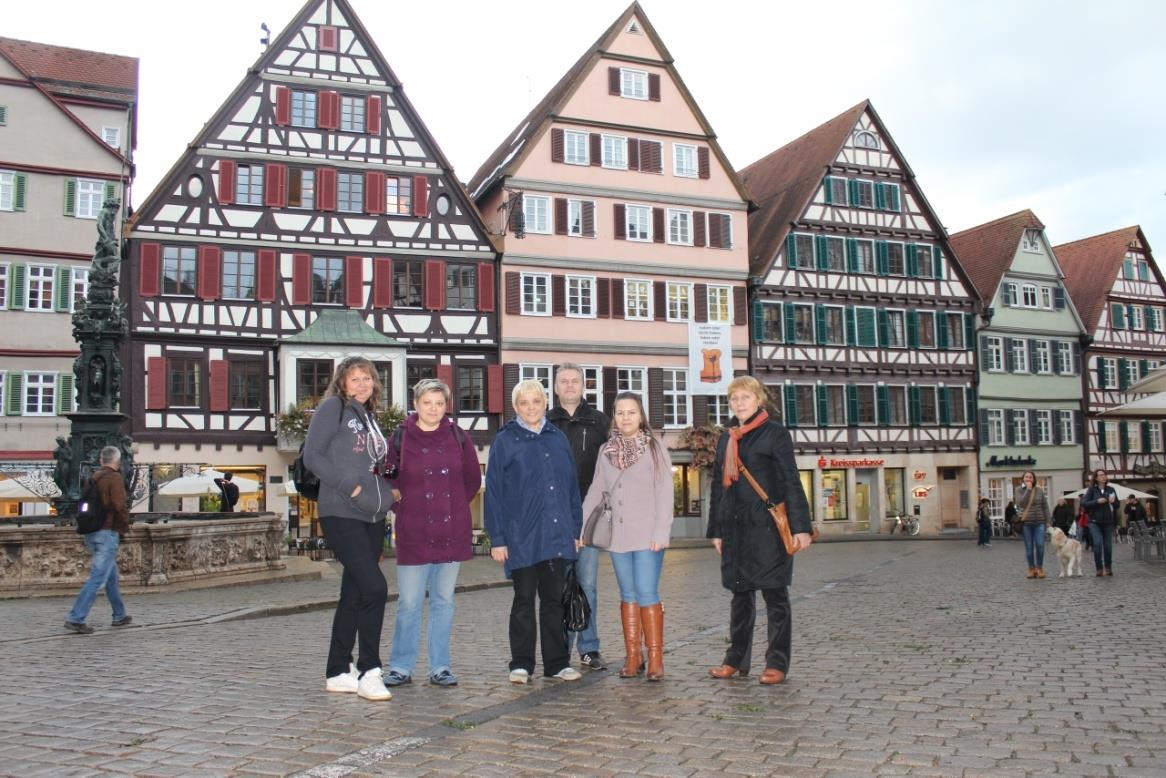
Lilia was not only an outstanding organizer but also a creative personality — screenwriter, actress, producer, publisher. Until her last day she devoted herself to work, inspiring others to continue her cause.
We will remember Lilia as a very persistent, businesslike, and benevolent woman who did much to strengthen friendship between our cities.
Events held by the “West-East” Society under the leadership of Lilia Künstle
Here are some events that were held by the West-East Society under the leadership of Lilia Künstle in recent years:
- exhibition “Cities in Winter” by Karelian artist Marina Mikova, 2014;
- on the occasion of the 100th anniversary of the construction of the Murmansk Railway in 1914 and the 25th anniversary of the partnership between Tübingen and Petrozavodsk, residents of both cities created a photo exhibition in 2014;
- master classes: Artistic works from felt: Galina Racheva (Petrozavodsk). Painting on silk: Anna Arlamova (Tübingen). Silk painting;
- exhibition “Memory of the Heart” by Anna Arlamova, Petrozavodsk, 2015;
- traveling exhibition “Inha’s Photo Epic: ‘Karelia Minus 124’” at the National Museum of the Republic of Karelia in Petrozavodsk, October 2018;
- joint literary project in Petrozavodsk for children aged 4–12, the fairy tale “Visiting Baba Yaga” and the opening of the exhibition “Witches of Different Peoples,” February 15, 2020;
- fashion show “Lighter than a Feather!”, 2020;
- literary and musical virtual meeting “Two Halves of Life” in two parts dedicated to the 250th anniversary of the birth of the great German poet Friedrich Hölderlin, followed by students’ participation in the quiz “Do You Know Friedrich Hölderlin?”, and much more…
Lilia Künstle’s words for the anniversary year
In conclusion, I would like to cite the words of Lilia herself, which she wrote in 2024 — the anniversary year for the sister-city ties between Petrozavodsk and Tübingen — 35 years.
Over these years much has changed, but our Friendship has remained unchanged. Now I would like to thank the administration, the department of culture, Frau Dagmar Weitzenegger, the municipal services of Tübingen, Herr Bernhard Hahn, as well as the activists and friends in Tübingen and Petrozavodsk for the help you provided us in drawing up the programs for the anniversary year. Our motto: Through culture to harmony and peace! I wish you all the best, inspiration, and creativity for future projects. Give joy to people, warm their hearts with good deeds, always be in the ranks, and walk easily “with a song through life”!
Authors
- Yakovleva Ekaterina Anatolyevna, Candidate of Pedagogical Sciences, Associate Professor, Petrozavodsk State University (Petrozavodsk, Russia) — yakowlewa85@yandex.ru
- Dvinskaya Valentina Tadzushevna — dvinaa@sampo.ru
- Konanova Vera Nikolaevna
- Konanov Boris Nikolaevich
Acknowledgments
The article was prepared thanks to the assistance of members of the Petrozavodsk–Tübingen Friendship Society and veterans of the Faculty of Foreign Languages of the Karelian State Pedagogical Institute.
List of sources and literature
- Petrozavodsk – Tübingen: the road of partnership and friendship. On the 30th anniversary of sister-city ties between the cities of Petrozavodsk and Tübingen (FRG) / URL: http://www.rkna.ru/exhibitions/tubingen/ (accessed: 05.10.2025) ↩
- Petrozavodsk and Tübingen celebrated the anniversary of 30 years of cooperation / URL: https://petrsu.ru/news/2019/55320/petrozavodsk-i-tyubi (accessed: 05.10.2025) ↩
- Künstle L.P. West-East Society Tübingen (Germany): 35 years of cooperation in cultural diplomacy. / Collection of abstracts of reports of the scientific-practical conference “Diversity of Cultures and Multi-Confessionality – Ways of Cooperation and Interaction” within the framework of the 100th anniversary of the Republic of Karelia and the 100th anniversary of the Republic of Tatarstan – pp. 71–75. ↩


